
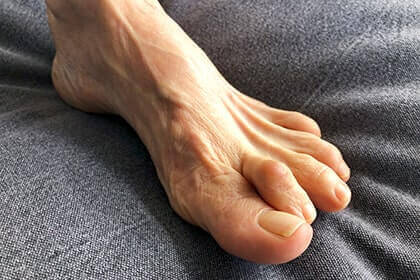
Do you notice one or more of your toes bending at an awkward angle? Does wearing shoes cause pain or discomfort that makes it hard to walk, run, or stand for long periods? Hammertoes might be the culprit.
Physicians Footcare™ specializes in diagnosing and treating foot conditions like hammertoes with compassionate, patient-centered care. Our team uses advanced technology, such as mobile 3D standing CT imaging and custom orthotics, to help you get back to what you love to do.
What Are Hammertoes?
Hammertoes can be identified by a constant abnormal bend in the middle joint of your toe. This abnormal bending increases pressure on the toe while wearing shoes, which can cause pain or discomfort when walking or running. Over time, the toe may become rigid and more difficult to treat.
Because hammertoes typically worsen and grow more rigid over time, seeking professional help early is essential. Early intervention can prevent the need for more invasive treatments down the road.
Signs and Symptoms
The most obvious sign of a hammertoe is the bent appearance of the affected toe. However, other symptoms often accompany this deformity. You may experience pain when walking or wearing shoes, especially those with narrow toe boxes or high heels.
Those with hammertoes may also experience other foot-related issues, such as corns or calluses. These develop due to friction and pressure from the toe rubbing against your footwear. Redness, swelling, and difficulty moving the toe are also common.
What Causes Hammertoes?
Several factors may increase your likelihood of developing hammertoes. Advanced age is a common risk factor, as the tendons and muscles in your feet naturally weaken over time. Toe length also plays a role—if your second toe is longer than your big toe, you may be more susceptible.
Improper footwear is one of the leading causes of hammertoes. Shoes that are too tight, too narrow, or have high heels force your toes into unnatural positions. Genetics can also contribute, as can certain medical conditions. Those who live with diabetes or arthritis are more likely to have foot-related complications, including hammertoes.
Treatment Options

Treatment for hammertoes depends on the severity and flexibility of the deformity. Conservative options include custom orthotics and medical pads for any corns or calluses that may develop. These devices help relieve discomfort and redistribute pressure away from the affected toe.
Light toe exercises may also help strengthen the muscles in your toes and improve mobility. In more advanced cases, surgical correction may be recommended to realign the toe and restore function. Your podiatrist will thoroughly examine your feet to provide a proper diagnosis and personalized treatment plan.
Prevention Tips
To help prevent hammertoes, choose shoes with ample toe room. Select low-heeled footwear with adjustable straps or laces to give your feet enough room to move. Buying shoes that are professionally fitted by a trained pedorthist is also important—they are your best line of defense against choosing a shoe that’s too small or tight for your feet.
Why Choose Physicians Footcare for Hammertoe Treatment in Columbia, SC?
At Physicians Footcare, our patients are like family. We’re committed to making sure our office environment is welcoming, friendly, and safe every time you visit.
Our practice stands out with unique offerings like our CT truck—mobile advanced 3D standing CT imaging that provides precise diagnosis right when you need it. Our in-house certified pedorthists can also custom-fit orthotics and footwear tailored to your specific needs.
Find Hammertoe Treatments Today
If you or someone you know has hammertoes, we can help. Don’t let foot pain hold you back from the activities you enjoy. A Physicians Footcare podiatrist will thoroughly examine your feet to provide a proper diagnosis and treatment plan.
Getting you back to what you love to do starts with a simple appointment. Request a consultation today.