Connect with us:
Blog
Items filtered by date: December 2019
Friday, 27 March 2020 12:04
Keeping Your Child’s Feet Healthy
Being a parent involves caring for your child in every way you can. You make sure they are eating the right food, being nice to others, and staying out of any trouble. However, it is also important that you are watchful of their health, more specifically their foot health. Maintaining good foot health in childhood is important in preventing later conditions in life from happening. As children continue to develop, their feet require different techniques of care. Here are some various ways in which you can help your child’s feet stay healthy.
A baby needs a lot of care and attention overall, but the importance of their feet should never be forgotten. Before a baby turns one, their feet change and develop greatly. It is important that during this time, a mother avoids putting tight socks on their child. She should also encourage movement of their feet so the baby can begin to feel more comfortable using them.
As a baby enters the toddler years of his or her life, they are begin to walk around. When your baby begins to take those first steps, it is crucial that they are wearing protective shoes on their feet. As a mother that is observant of your child’s feet, you may notice changes in them. This is completely normal as the feet are becoming susceptible to the activity of walking. It is normal for a toddler to be a bit unsteady or to “walk funny” at first.
When your child grows out of their toddler years, it is important that you begin to show him or her how to care for their feet on their own. Practice with your child proper hygiene in order to prevent foot fungus or infection. Since children are constantly on the move, it is crucial to be cautious of any accidents or injuries that might occur. If an injury occurs, it is advised that you take your child to be examined by a doctor immediately. Since your child is still growing, particular injuries can shift the way in which a bone or other important part of the foot is developing.
Babies and kids are always changing and growing. Your job as a parent is to make sure they stay healthy and making sure they are properly maintained. This involves proper foot care and making sure the feet stay healthy. Following this guide, your child can live a long and happy life.
Tuesday, 24 March 2020 12:52
Physicians Footcare To Remain Open | Continual Patient Care

Friday, 21 February 2020 12:48
Guide to Keeping Your Child’s Feet Healthy
Being a parent involves caring for your child in every way you can. You make sure they are eating the right food, being nice to others, and staying out of any trouble. However, it is also important that you are watchful of their health, more specifically their foot health. Maintaining good foot health in childhood is important in preventing later conditions in life from happening. As children continue to develop, their feet require different techniques of care. Here are some various ways in which you can help your child’s feet stay healthy.
A baby needs a lot of care and attention overall, but the importance of their feet should never be forgotten. Before a baby turns one, their feet change and develop greatly. It is important that during this time, a mother avoids putting tight socks on their child. She should also encourage movement of their feet so the baby can begin to feel more comfortable using them.
As a baby enters the toddler years of his or her life, they are begin to walk around. When your baby begins to take those first steps, it is crucial that they are wearing protective shoes on their feet. As a mother that is observant of your child’s feet, you may notice changes in them. This is completely normal as the feet are becoming susceptible to the activity of walking. It is normal for a toddler to be a bit unsteady or to “walk funny” at first.
When your child grows out of their toddler years, it is important that you begin to show him or her how to care for their feet on their own. Practice with your child proper hygiene in order to prevent foot fungus or infection. Since children are constantly on the move, it is crucial to be cautious of any accidents or injuries that might occur. If an injury occurs, it is advised that you take your child to be examined by a doctor immediately. Since your child is still growing, particular injuries can shift the way in which a bone or other important part of the foot is developing.
Babies and kids are always changing and growing. Your job as a parent is to make sure they stay healthy and making sure they are properly maintained. This involves proper foot care and making sure the feet stay healthy. Following this guide, your child can live a long and happy life.
Tuesday, 28 January 2020 12:45
High Heels Biomechanically Affect the Body | Driessen, DPM
My face met the ground the first time I wore heels. Okay, maybe that was bit of an exaggeration. I didn’t exactly fall but I came pretty close. I wonder what went wrong. Could it possibly have been the height? No, they were only 3 inches. Despite how “low” I thought the heel was, research has shown, as the heel’s height increases, so does the increased amount of pressure on the forefoot (ball of foot). For example:
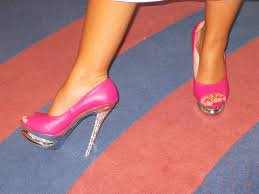
1-inch = 22%
2-inches = 57%
3-inches = 76%
Can you imagine if I wore 6 inch heels?
In a survey of 100 women, 26 said they never wore heels; 74 wore them at some point in their lives. Although it has been shown over a 30 year span, less women are wearing heels today (40%) than in the 1980’s (60%);
more younger women (ages 18-25) wear high heels (50%) compared to those in their 50’s and up (35%). I found this survey very interesting. The point is most women wear heels and this practice, although declining in comparison to earlier years, is still ever present.
Recall the old adage: “Form follows function”. This was a principle associated with architecture. It states that the shape of an object should be based on its intended function or purpose. Think of it this way, high heels cause muscles in the leg to become fatigued or function abnormally for long periods of time. One may develop “form” issues in the sense of poor posture, stress on the back of the knees, shortened calf muscles, or even spine problems over time.
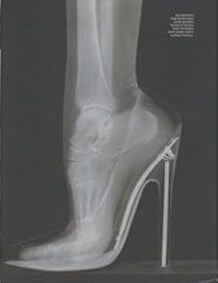
Let’s Review Some Anatomy (And How High Heels Affect Them):
Feet: The feet can be considered the base or foundation of the body’s skeleton. For those home builders out there, you may know, if you don’t have a good foundation, that house is subject to unevenness and instability. In the foot, joints become unsteady, arthritic, and painful which can lead to bunions and hammer-toes.
Calf muscle: The calf muscle or Gastrocnemius-Achilles tendon unit is one of the strongest muscle-tendons in the body. It helps one during push off and the propulsive phase of gait (walking). It works best when it is elongated and freely glides. Wearing high heels can shorten this muscle-tendon unit over time, which can lead to problems when walking barefoot or in other shoes. You might be enjoying those compliments of how nice your legs look from behind, but they may be costly in the long run.
Knees: Wearing high heels shift the knees forward, thus straining the back of the knees and hamstrings. The knee joint itself may develop arthritis over time.
Hips: As the center of gravity continues to shift forward, the hips become affected and can throw off one’s posture. Many thigh muscles originate from the hips and control how one stands, walks, or runs.
Back: As the knees and hips move forward, the back compensates by hyperextending backwards. Sure this will back your derriere look nice (hence, the cat calls again); however, this may lead to back soreness, spasms, and eventually spinal issues.
Am I saying, “Don’t EVER wear heels”? No. But, I think the best patient is a well-informed patient. Would I wear them again? Sure. Knowing what I know now, I think I will stick with a lower heel.
Our expert team of Foot Doctors know feet. Contact Physicians Footcare and schedule your immediate appointment.
Monday, 23 December 2019 12:39
Causes and Treatment of Plantar Fasciitis
The plantar fascia is a connective tissue in the heel that stretches across the bottom length of your foot. Plantar fasciitis occurs when the connective tissue becomes inflamed, causing heel pain and discomfort during physical activity. Although the condition is completely treatable, traditional methods can take up to a year to start becoming effective.
Plantar fasciitis is caused by a number of everyday activities, so understanding the condition is important for managing and treating it. One of the most common causes of plantar fasciitis is excessive running, especially with improper fitting or non-supportive shoes. Too much exercise can lead to the plantar fascia being overworked and overstretched, which can cause tears in the tissue. Along with improper fitting shoes, pronation, the rolling of the feet inward, is a common cause of plantar fasciitis. If not treated properly, the plantar fascia becomes overstretched and starts to tear, causing inflammation.
Despite the common causes of plantar fasciitis, there are many different treatment options. For less severe cases, conservative home remedies include taking anti-inflammatory drugs to alleviate pain, applying ice packs to the bottom of your foot and heel, slowly stretching and exercising your feet to re-strengthen the tissue, and using orthotic devices are all ways to help manage your plantar fasciitis.
For more severe cases, shockwave therapy has become a common solution for plantar fasciitis. Shockwave therapy can effectively break up the tissue on the bottom of your foot which facilitates healing and regeneration. This fights the chronic pain caused by plantar fasciitis. Even if this doesn’t work, surgery is always a final option. Surgery on the tissue itself can be done to permanently correct the issue and stop the inflammation and pain in your heels.
No matter what the case may be, consulting your podiatrist is the first and best step to recovery. Even the slightest amount of heel pain could be the first stage of plantar fasciitis. Untreated symptoms can lead to the tearing and overstretching of tissue. Because the tearing of tissue can be compounded if it remains ignored, it can evolve into a severe case. The solution is early detection and early treatment. Talk to your podiatrist about the possibilities of plantar fasciitis if you’re experiencing heel pain.
Monday, 09 December 2019 12:34
When to See a Podiatrist | Harry Cotler, DPM
Like issues with other parts of your body, not every foot problem requires a trip to the podiatrist. Some may resolve with a little rest, ice, and over-the-counter pain medicine. But, if you have a persistent problem that won’t go away, then a trip to Physicians Footcare is necessary.
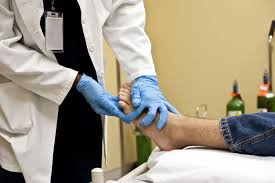
Here’s a list of the type of foot problems that warrant a trip to a podiatrist:
• If you have one foot that has a flattened arch, it can be a sign of a tendon injury. Tendons that don’t function properly can lead to joint problems and misaligned bones. Prolonged tendon injuries can cause permanent damage to the foot, so the sooner you see your podiatrist the better.
• If you have a sore on your foot that won’t heal, you must see a podiatrist. Those with diabetes are especially at risk for foot sores. And if left untreated, sores may lead to amputations. The best advice is to go to your podiatrist as soon as possible. The longer you have an open sore, the more prone you are to infection which can eventually travel into your entire body, requiring hospitalization or surgery.
• If you’re experiencing foot or ankle pain that gets worse when you walk, you should see a podiatrist immediately. Many people try to live with the pain, which is not a good idea. Persistent pain may be a sign of a stress fracture. Your podiatrist can x-ray your foot to determine if a stress fracture exists.
• If you have severe pain in your foot or ankle that lasts more than 24 hours, then you need to see your podiatrist. There are a variety of conditions that could cause severe foot and ankle pain including compartment syndrome, deep vein thrombosis, or a broken bone.
• If you experience pain in your feet while they’re elevated, then you also need to see a podiatrist. For example: If you experience pain while resting your feet on an ottoman, and the pain goes away when you put your feet flat on the floor, then you may have peripheral artery disease or decreased blood flow. A Physicians Footcare podiatrist can quickly assess if you have these conditions and then refer you to the appropriate specialists for treatment.
• If you experience discoloration on areas of the foot or ankle, then you absolutely need to see a podiatrist. Your feet should look the same. Redness may be a sign of injury or infection. Blue and purple coloration could indicate vein problems. Your Physicians Footcare podiatrist is the authority on everything foot related and can quickly assess what the discoloration of your feet means and offer a treatment plan.
These are just some of the signs that you need to see a podiatrist. If you’re experiencing symptoms that persist for more than 24 hours, a visit to Physicians Footcare is warranted. As podiatrists, we’re the authority on feet and ankles. We can quickly assess your feet, treat your condition, and help get you back on your feet and back to what you love to do.
Wednesday, 10 July 2019 12:34
Everything You Need to Know About Gout
Gout, typically found in diabetic patients, is an unusually painful form of arthritis caused by elevated levels of uric acid in the bloodstream. The condition typically strikes the big joint on the big toe. It has also been known to strike the knees, elbows, fingers, ankles and wrists—generally anywhere that has a functioning, moving joint.
The high level of uric acid in a person’s bloodstream creates the condition known as hyperuricema—the main cause of gout. Genetic predisposition occurs in nine out of ten sufferers. The children of parents who suffer gout will have a two in ten chance of developing the condition as well.
This form of arthritis, being particularly painful, is the leftover uric acid crystallizing in the blood stream. The crystallized uric acid then travels to the space between joints where they rub, causing friction when the patient moves. Symptoms include: pain, redness, swelling, and inflammation. Additional side effects may include fatigue and fever, although reports of these effects are very rare. Some patients have reported that pain may intensify when the temperature drops, such as when you sleep.
Most cases of gout are easily diagnosed by a podiatrist’s assessment of the various symptoms. Defined tests can also be performed. A blood test to detect elevated levels of uric acid is often used as well as an x-ray to diagnose visible and chronic gout.
Treatment for gout simply means eliminating symptoms. Non-steroid anti-inflammatory drugs or NSAIDs (Colchicine and other corticosteroid drugs, etc.) will quell the redness, the swelling, and the inflammation. However, managing your diet, lifestyle changes, and using preventative drugs are all helpful toward fully combating the most severe cases.
Those that lead an inactive lifestyle are at a higher risk for gout. Any amount of exercise decreases the probability of repeat encounters with the condition. Reducing your consumption of red meat, sea food, and fructose-sweetened drinks also reduces the likelihood of chronic gout as well.
Ingesting Vitamin C, coffee, and particular dairy products can help with maintaining a healthy lifestyle. There are new drugs out on the market that inhibit the body’s production of uric acid-producing enzymes. However, reducing or eliminating your overall levels of uric acid is the best remedy to ensuring you lead a gout-free life.
Tuesday, 02 July 2019 12:35
How to Prevent and Battle Bunions | Sabina Abbasova, DPM
Patients often come into the office reporting that they have bunion growing like a “golf ball” by the great toe. While it is true that there is spurring that is happening around the joint at the later stages of bunion development the circular ball like bone, we are feeling through the skin did not grow out but moved out.
What are bunions and why do we get them? The diagnosis is called hallux abductovalgus deformity (HAV) which explains that the great toe moves away from the center of the body and the first metatarsal, the long bone behind the great toe rotates. This rotation causes the joint at the base of the great toe to dislocate moving the circular head of the metatarsal and creating an illusion of a “ball” that gets larger as the deformity becomes more severe and the joint continues to dislocate.
The type of dislocation and joint destruction will all depend on the biomechanics of the foot. Both nature and nurture contribute to development of bunion deformities. Looking at your grandparents and parents’ feet, you may recognize late stages of the deformities that you are beginning to face as alignment of the bones and flexibility of the joints that we are born with will largely determine the fate.
Does this mean that there is nothing we can do to stop the deformity and progression? We can slow the process and avoid much of the pain by wearing the proper shoes for the foot type and if necessary, getting custom foot orthotics. Consulting your local podiatrist and working with a pedorthist can educate you and provide you with the conservative treatment as well as medical devices to realign the biomechanics and slow the progression of the bunion deformity.
If the conservative treatment fails, the appropriate surgical procedure for the deformity can be discussed and considered. The extent of the deformity evaluated on x-rays as well as patient’s life style contributes to the decision-making process.
You don’t have to live with discomfort and pain and with conservative or surgical intervention there is a treatment option available to get you back to what you love to do.
Wednesday, 26 June 2019 12:32
Pedicure Do's and Dont's | Jamelah Lemon, DPM
Sunshine! Beaches! Swimming Pools! Vacation! These are the sights and sounds of summertime.
Now that the weather is getting hotter, we have our toes out and are getting them groomed at our favorite nail salons or spas. While pedicures are a fun way to unwind and relax you must be careful as some pedicures can cause harmful infections especially if you have diabetes.
Here are the Do’s and Don’ts for a safe & healthy pedicure.
DO schedule an early appointment. In the morning, the foot baths are usually cleaner and if you are the first customer of the day there is less chance that other customers have not contaminated the foot bath. If you can’t arrive early sure the technician cleans the tub and the filter before your service.
DO bring your own pedicure utensils. Bacteria and fungus can move easily from one person to the next if the salon is not sterilizing the instruments properly.
DO have your nails trimmed straight across. Make sure your technician trim them straight across and does not dig into the sides or try to trim out ingrown toenails; this can lead to infections and be very painful. If you have an ingrown nail schedule an appointment with one of our podiatrist at Physicians Footcare.
DO watch for signs of infection. If your skin bleeds or gets nicked at the salon, make sure to carefully clean the area. If you notice signs of infection such as redness, swelling, discoloration, drainage or warmth at the area please make an appointment with one of our podiatrist.
DON’T shave your legs before your pedicure. When your legs are newly shaven, you leave small cuts in your skin allowing an opening for bacteria to enter.
DON’T use blades. Never allow a technician to touch your feet with a blade, cheese grater instrument or razor to remove dead skin. The use of sharp instruments can result in permanent damage and easily cause infection.
DON’T apply nail polish to cover up discolored nails. Thick and discolored toenails could be a sign of a fungal infection. Nail polish locks in moisture and does not allow the nail bed to breathe. If you think you have a toenail infection, schedule an appointment with one of our podiatrists at Physicians Footcare.
Wednesday, 19 June 2019 12:31
Physicians Footcare Welcomes Three New Podiatrists
Physicians Footcare is excited to announce the addition of three podiatrists to our team in August:
Dr. Jessica Fink will be seeing patients at our Florence and Hartsville locations.
Dr. Matthew Engelthaler will be seeing patients at our Aiken location.
Dr. Harold Cook will be seeing patients at our new location in Newberry.
