
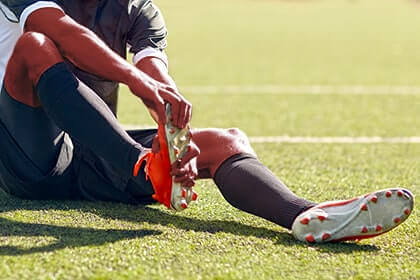
A heel that starts aching halfway through a run can have a very different cause than an ankle that twists during a basketball game. Knowing what happened and which structures are affected helps determine the right treatment.
At Physicians Footcare, our podiatrists evaluate sports-related foot and ankle conditions throughout South Carolina and Georgia as part of our foot and ankle care. Dr. Erica Evans is board certified by the American Board of Foot and Ankle Surgery in Foot Surgery and Reconstructive Rearfoot and Ankle Surgery and has experience treating sports medicine injuries.
Common Foot and Ankle Sports Injuries
Sports injuries generally fall into two categories: those caused by a sudden event and those that develop gradually from repeated stress.
A misstep or awkward landing can cause an ankle sprain, sometimes leaving the joint swollen or unstable. Repetitive activity, on the other hand, may contribute to conditions such as:
- Achilles tendon problems: Pain or stiffness along the tendon behind the heel, particularly during running or jumping.
- Plantar fasciitis: Discomfort beneath the heel, often noticeable with the first steps after rest.
- Stress fractures: Small cracks in a bone that can develop when repetitive loading exceeds the bone’s ability to recover.
Changes in training intensity, inadequate rest, poorly fitting footwear, and previous injuries can increase the likelihood of developing these problems.
How We Diagnose and Treat Sports Injuries
Your evaluation begins with questions about when symptoms started, what makes them worse, and whether you’ve experienced similar trouble before. We’ll examine the affected area, assess movement and stability, and determine whether imaging is necessary.
X-rays may help identify fractures, while more detailed studies can be useful for selected conditions. Our mobile weight-bearing CT imaging can assist with certain structural evaluations when clinically appropriate and available.
Treatment might involve temporarily reducing activity, bracing, physical therapy, supportive footwear, or custom orthotics. Medication may also be appropriate for some patients. More serious problems occasionally require surgical evaluation, although many sports-related conditions improve without an operation.
Returning to Sports After an Injury

Feeling better doesn’t always mean the affected tissues have fully healed. Before returning to demanding exercise, you may need to regain comfortable movement, strength, balance, and stability.
Your recovery plan should reflect what you actually do. Running several miles, playing recreational basketball, and returning to a physically demanding job place different stresses on the feet and ankles. Increasing activity gradually can help limit setbacks.
Why Choose Physicians Footcare for Sports Medicine in South Carolina & Georgia?
Our podiatrists work with patients experiencing everything from acute ankle trauma to discomfort that develops over months of exercise. We consider the diagnosis alongside your activity level, footwear, previous injuries, and the movements that cause pain.
Dr. Evans brings experience with sports medicine injuries and reconstructive foot and ankle surgery. She also played collegiate basketball at Iowa State University and completed the Boston Marathon in 2023, giving her firsthand familiarity with athletic training and physical demands.
With Physicians Footcare locations across South Carolina and Georgia, patients can receive an evaluation and discuss practical ways to return to their usual activities.
Frequently Asked Questions
Both can cause swelling, bruising, and pain when walking. An examination and, when necessary, X-rays can help distinguish a ligament injury from a broken bone.
Sharp, worsening, or persistent pain shouldn’t be ignored. Stop the activity that aggravates your symptoms and seek an evaluation if discomfort continues, swelling develops, or walking becomes difficult.
Repetitive stress can gradually irritate tendons, strain the plantar fascia, or cause bone stress injuries. These problems may develop without a single memorable incident.
Orthotics may improve support or redistribute pressure for certain foot mechanics problems. They can be useful for selected patients, but they cannot prevent every injury.
Returning safely involves more than waiting a certain number of days. Your podiatrist will consider healing, strength, mobility, swelling, and whether you can perform the movements your sport requires without worsening symptoms.
Repeated instability may indicate lingering ligament damage, weakness, or problems with balance and joint control. An evaluation can help determine why the ankle feels unreliable.
Wear shoes appropriate for your activity, increase training intensity gradually, and allow time for recovery. Strengthening exercises, balance training, and properly addressing previous injuries may also reduce your risk.
Get Back to the Activities You Enjoy
Whether you’re dealing with a recent sprain or pain that keeps returning during exercise, finding the cause can help you make informed decisions about care. Our Physicians Footcare team sees patients throughout South Carolina and Georgia. For an appointment, call our Beaufort, SC, office at 843-524-7246 or Savannah, GA, office at 912-446-3824. You can also contact us online.