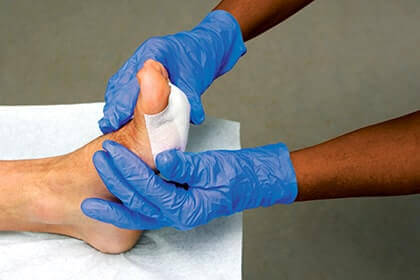
Why Foot Wounds Need Prompt Attention
Diabetic neuropathy can make it harder to feel pain, heat, pressure, or an injury. Circulation problems may also limit the oxygen and nutrients needed for tissue repair. Together, these changes can allow a minor sore to deepen or become infected before you realize how serious it is.
Foot wounds may develop from:
-
Blisters, cuts, punctures, or cracked skin
-
Shoes that rub or create pressure points
-
Corns or calluses that break down
-
An injury that goes unnoticed because of numbness
-
Ingrown toenails or other skin and nail concerns
A wound that is red, swollen, draining, warm, discolored, painful, or slow to close should be examined. People with diabetes should contact a medical professional promptly after finding a new sore, blister, or break in the skin rather than attempting to manage it alone.
What Happens During Wound Care?
Your podiatrist will examine the wound, surrounding skin, circulation, sensation, and areas of pressure. Testing may be recommended when there are concerns about infection, blood flow, bone involvement, or another condition affecting healing.
Treatment depends on the wound’s type, depth, location, and cause. Care may include cleaning and dressing the area, removing unhealthy tissue, treating infection, and reducing pressure on the foot. When needed, your podiatrist may coordinate additional medical or surgical care.
Keeping weight and friction away from the wound is often an important part of recovery. Padding, protective footwear, an off-loading device, or custom orthotics may be considered based on your needs.
Caring for Your Feet Between Visits
Follow the instructions given by your podiatrist and keep all recommended follow-up visits. Do not apply peroxide, iodine, ointments, or home remedies unless your medical team has instructed you to do so.
Check your feet every day, including the soles and spaces between your toes. Wash them in warm water, dry them carefully, wear properly fitting shoes, and avoid walking barefoot. Do not cut corns or calluses yourself.
Managing blood sugar as directed by your diabetes care team and receiving regular foot examinations can also reduce the chance that an unnoticed injury will progress.
Why Choose Physicians Footcare for Wound Care in South Carolina & Georgia?
Physicians Footcare has offices throughout South Carolina and Georgia, making follow-up visits more accessible for patients who need ongoing monitoring. Our podiatrists care for routine foot concerns as well as diabetic complications and wounds.
The practice also has certified pedorthists who assist with footwear, inserts, and pressure-relieving devices when appropriate. Recommendations are based on the condition of the tissue, circulation, sensation, infection risk, and your general health.
Our goal is to protect healthy tissue, support healing, and help you remain as mobile as your condition safely allows.
Frequently Asked Questions
Request a Foot Wound Evaluation
A sore that is not improving should not be ignored. Contact us to request an appointment with Physicians Footcare in South Carolina or Georgia, or use our office directory to find the phone number for the location nearest you.