
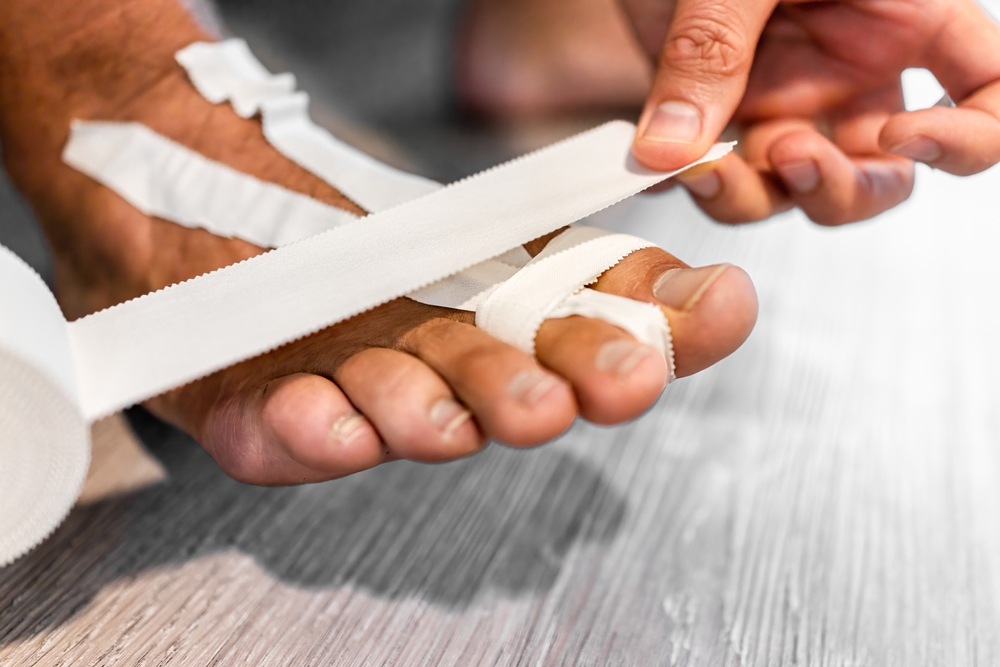
 It doesn’t take much—a sudden stop, a quick pivot, or an awkward landing—and your big toe bends too far upward. That’s turf toe, and despite its casual name, the pain can be anything but minor. Turf toe can happen in a split second, whether you’re sprinting down a field, chasing after kids, or simply pushing off the wrong way during everyday activity. And while it’s commonly linked to athletes, this type of joint sprain can sideline just about anyone. If you’re wondering whether to see a podiatrist for turf toe or how turf toe rehabilitation actually works, you’re not alone.
But what exactly is turf toe—and how can you tell if that foot pain is something more serious? Let’s take a closer look.
What Is Turf Toe?
Turf toe is a sprain of the main joint at the base of your big toe—known as the metatarsophalangeal (MTP) joint—caused when the toe is forcefully bent upwards beyond its normal range of motion. This often happens when the forefoot stays flat on the ground while the heel is lifted suddenly, putting excessive strain on the joint and surrounding ligaments.
While the name comes from its common occurrence on artificial turf fields, turf toe isn’t limited to athletes. Anyone who spends long hours on hard surfaces, wears unsupportive shoes, or participates in high-impact activities—from sports to demanding jobs—can experience this type of injury.
Turf toe injuries are classified into three grades:
- Grade 1: Minor stretching with mild swelling and tenderness.
- Grade 2: Partial tear of the ligament with moderate pain and limited movement.
- Grade 3: Complete tear with severe pain, swelling, and instability in the toe joint.
Without proper care, this injury can lead to chronic foot pain and long-term joint instability, making early evaluation by a podiatrist for turf toe essential.
What Are the Signs and Symptoms of Turf Toe?
Turf toe symptoms can range from subtle discomfort to intense pain that interferes with walking, depending on the severity of the injury. One of the most common early signs is a sudden pain at the base of the big toe, often following a specific moment of overextension. Some people describe it as a “jammed” or “popped” feeling during a push-off motion.
The main symptoms include:
- Pain and tenderness at the base of the big toe, especially when bending it upward
- Swelling and bruising around the joint
- Limited range of motion or stiffness in the toe
- Instability or weakness when trying to walk, run, or push off the foot
- A popping sound or sensation at the time of injury (more common in Grade 2 or 3 sprains)
Because turf toe symptoms can overlap with other causes of foot pain, it’s important to consult a medical professional for an accurate diagnosis. Your podiatrist for turf toe will evaluate your toe’s range of motion, check for joint instability, and may order imaging (like an X-ray or MRI) to confirm the extent of the damage.
What Causes Turf Toe?
Turf toe develops when the big toe bends upward beyond its normal range of motion, straining or tearing the ligaments around the joint. While it’s often associated with athletes, the injury isn’t limited to the playing field.
Common causes include:
- Hard or unforgiving surfaces—like concrete floors in warehouses or kitchens—that increase impact on the foot
- Unsupportive footwear, especially flexible shoes or sandals that allow too much toe movement
- Sudden movements, including pivoting, lunging, or stumbling
- Repetitive motions that involve frequent crouching or pushing off the forefoot, as seen in activities like squatting, lifting, or rushing upstairs
Whether you’re working a physically demanding job or staying active in your free time, proper support and turf toe rehabilitation are essential to avoid long-term joint damage and ongoing foot pain.
How Is Turf Toe Treated?
Prompt treatment is key to minimizing long-term issues and reducing foot pain caused by turf toe. Whether you’ve experienced a mild sprain or a more serious tear, your recovery plan will depend on the severity of the injury. Your podiatrist will assess the damage and create a personalized treatment strategy based on your symptoms, activity level, and health history.
Initial Care and Foot Pain Management
For most turf toe injuries, especially Grade 1 and 2 sprains, conservative treatment is effective. The first line of care often includes:
- Rest: Minimize pressure and movement on the toe to prevent further damage.
- Ice: Apply cold packs in 15–20 minute intervals to reduce swelling.
- Compression: Use a soft wrap or supportive tape to stabilize the joint.
- Elevation: Raise the foot above heart level to decrease inflammation.
- Footwear modification: Switch to stiff-soled or rocker-bottom shoes to limit toe movement.
These measures may be combined with anti-inflammatory medications under the guidance of your podiatrist.
When to See a Podiatrist for Turf Toe
If pain persists beyond a few days, or if you notice severe swelling, bruising, or instability, it’s time to see a podiatrist. Grade 2 and 3 sprains may require imaging to assess the extent of ligament damage. In some cases, a walking boot, orthotic insert, or even temporary immobilization may be recommended.
Turf Toe Rehabilitation and Recovery
Once inflammation has subsided, turf toe rehabilitation begins. The goal is to restore strength, stability, and mobility in the toe joint while minimizing the risk of reinjury. This phase may be managed by your podiatrist’s sports medicine program.
A typical turf toe rehab plan includes:
- Range of motion exercises to prevent joint stiffness
- Strengthening movements targeting toe flexors and stabilizing muscles
- Balance and proprioception training to restore control and prevent instability
- Gradual return-to-activity protocols tailored to your lifestyle
Turf Toe Rehab Exercises
As you regain mobility and reduce pain, your podiatrist may incorporate targeted exercises into your turf toe rehabilitation plan to help restore joint function and prevent stiffness. These rehab movements are designed to gradually rebuild strength, flexibility, and balance in the big toe and surrounding structures. Performed consistently and correctly, they can significantly speed up recovery and reduce the risk of reinjury.
Some commonly prescribed turf toe rehab exercises include:
- Towel scrunches: Place a towel on the floor and use your toes to scrunch it toward you—this strengthens toe flexor muscles and improves range of motion.
- Toe curls with resistance band: Loop a resistance band around your big toe and curl it downward to rebuild strength and control in the joint.
- Marble pickups: Pick up small objects like marbles or buttons using your toes to enhance dexterity and muscle coordination.
- Calf stretches: Stretch the calf muscles and Achilles tendon to reduce stress on the toe and improve overall foot flexibility.
These turf toe rehab exercises should always be done under the guidance of your podiatrist and may be adjusted based on your stage of healing.
How Long Does Turf Toe Recovery Take?
Turf toe rehabilitation time varies depending on the severity of the injury and how soon treatment begins. Mild cases may heal within a couple of weeks, while more serious sprains can take months to fully recover, especially if the injury is ignored or aggravated.
Here’s a general timeline based on turf toe severity:
- Grade 1 (mild): 1–2 weeks of rest and modified activity, with a gradual return to normal movement.
- Grade 2 (moderate): 2–6 weeks of recovery with physical therapy and possible bracing.
- Grade 3 (severe): 6 weeks to several months, often requiring immobilization, extensive rehab, and close supervision by a podiatrist.
Working with a provider who specializes in sports medicine or podiatric foot pain is key to making a safe and full return to activity.
Find a Physicians Footcare Podiatrist for Turf Toe Treatment Near You
Turf toe may start with a single misstep, but without the right treatment, it can lead to long-term discomfort and instability. Whether you’re an athlete, an active professional, or simply someone experiencing persistent foot pain, getting an accurate diagnosis and a personalized turf toe rehabilitation plan is essential for a full recovery.
At Physicians Footcare, we’re proud to be the Southeast’s premier podiatry provider. With over 17 locations across South Carolina and Georgia, we deliver top-tier care using advanced diagnostic tools (including X-rays and in-office imaging), custom orthotics, and personalized treatment plans. Our board-certified podiatrists and certified pedorthists are experts in sports medicine and foot trauma, including turf toe, ankle sprains, and other acute injuries. Make an appointment today and take the first step toward healing safely and confidently with Physicians Footcare.